

Government Announces ₹500 Crore ARAI Research Centre in Mandya to Strengthen Automotive R&D
 09 Feb, 2026
 236
236

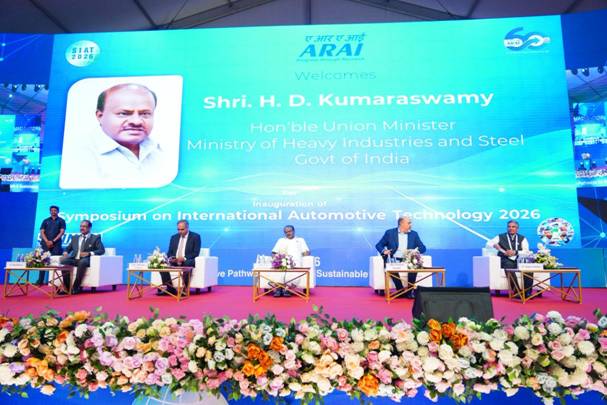
The Union Government has announced the establishment of a new Automotive Research Association of India (ARAI) research centre in Mandya, Karnataka, with an initial investment of ₹500 crore. The facility is aimed at strengthening India’s automotive research, testing, certification, and innovation capabilities, and is expected to play a critical role in supporting the country’s rapidly evolving automobile industry.
The proposed centre will serve as a state-of-the-art automotive research and testing hub, aligned with global standards. It will enhance India’s ability to meet increasingly stringent safety and emission norms while supporting the transition toward advanced mobility solutions, including electric and alternative-fuel vehicles.
Strategic Significance of the ARAI Mandya Facility
ARAI is a key institution in India’s automotive ecosystem, responsible for vehicle homologation, safety certification, and applied research. The Mandya centre will expand ARAI’s national footprint and improve access to advanced testing and validation infrastructure for manufacturers and suppliers.
By enabling faster regulatory approvals and reducing dependence on overseas testing facilities, the new centre is expected to lower compliance costs and shorten product development cycles. The project is also likely to stimulate regional industrial growth and generate skilled employment in Karnataka.
Sector-Wise Impact on the Automotive Ecosystem
Automobile Manufacturing Sector
The new research facility is expected to benefit vehicle manufacturers by improving access to domestic testing, validation, and certification services. This will support faster product launches, improved vehicle safety, and better compliance with evolving emission and safety regulations. Over time, this can enhance competitiveness in both domestic and export markets.
Auto Components and Ancillary Sector
Component manufacturers are likely to gain from improved testing and validation capabilities for critical systems such as braking, powertrain, electronics, and safety components. Enhanced R&D support will enable suppliers to align products with global standards, improve quality, and strengthen export readiness.
Electric Vehicle and Advanced Mobility Sector
The ARAI centre is expected to play a key role in supporting electric and next-generation mobility technologies, including battery systems, power electronics, and alternative fuel solutions. Access to specialised testing infrastructure will accelerate innovation and help de-risk new technology development.
Engineering, Testing, and Certification Services Sector
The expansion of ARAI’s infrastructure is likely to boost demand for engineering, testing, calibration, and certification services. This will strengthen India’s domestic capabilities and reduce reliance on foreign certification agencies.
Long-Term Industry Implications
The Mandya ARAI research centre aligns with the government’s broader initiatives such as Make in India, Atmanirbhar Bharat, and the national electric mobility roadmap. By strengthening domestic R&D infrastructure, the project is expected to enhance technological self-reliance, improve regulatory efficiency, and foster innovation across the automotive value chain.
Conclusion
The ₹500 crore investment in the ARAI research centre marks a significant milestone in India’s automotive development strategy. By strengthening research, testing, and certification capabilities, the initiative is expected to support sustainable growth, improve safety standards, and position India as a globally competitive automotive and mobility hub.
Popular posts

India's Talent behind the JIO 5G roll ou...
 The BharatBiz
20 Apr, 2024
The BharatBiz
20 Apr, 2024
 16
5206
16
5206

How to calculate GDP of a Country
The BharatBiz
02 Oct, 2023
16
5546

Positive Impact Of Demoniterization
The BharatBiz
04 Sep, 2023
16
5213